- Home >
- Institut Curie News >
- ERC Synergy Grants 2026: Double Success for Institut Curie
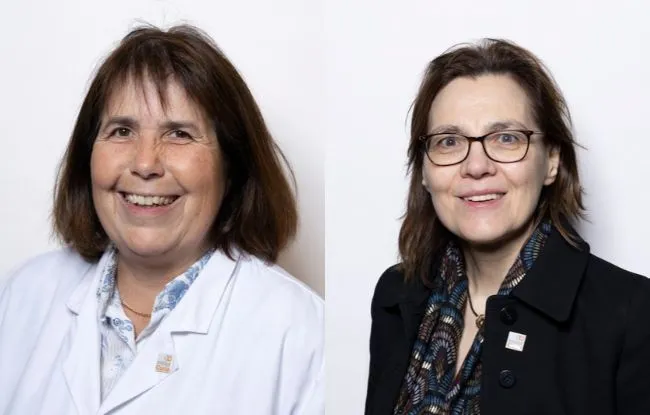
Drs. Gudrun Schleiermacher and Anne Houdusse are among the recipients of the prestigious 2026 ERC Synergy Grants, announced on November 12, with their respective projects EVO-DETECT and MAROCO! With funding of up to €10 million over six years, these two projects aim to tackle major scientific challenges: detecting aggressive neuroblastomas earlier and unraveling the mechanisms of muscle contraction.
The European Research Council's ERC Synergy Grants support ambitious scientific projects that can only be pursued by bringing together complementary expertise. Among Europe's most prestigious funding opportunities, these grants provide up to €10 million over six years, enabling researchers to explore fundamental questions, bridge disciplines, and develop innovative approaches.
EVO-DETECT: Anticipating Aggressive Forms of Neuroblastoma
Why do some neuroblastomas, childhood cancers that originate during fetal development, regress spontaneously while others become particularly aggressive? EVO-DETECT aims to trace the earliest stages of their evolution to identify the molecular changes that signal progression toward high-risk disease.
By combining genetic and epigenetic analyses, experimental models, and liquid biopsies, the consortium aims to develop a blood test capable of detecting these signals very early in life. An initial study has already identified tumor DNA in blood samples collected at birth from two of five children who subsequently developed neuroblastoma. This encouraging preliminary finding warrants further investigation.
Coordinated by Dr. Frank Westermann (German Cancer Research Center, Heidelberg, Germany), the project brings together Profs. Matthias Fischer and Martin Peifer (University Hospital Cologne, Germany) and Dr. Gudrun Schleiermacher, pediatric oncologist and research team leader at Institut Curie. A specialist in liquid biopsies, she will lead the development of molecular detection methods.
MAROCO: Understanding the Mechanics of Muscles in Motion
Our heart beats approximately 100,000 times a day. Yet how the proteins in our muscles coordinate their movements to produce contractions remains poorly understood. MAROCO focuses on the sarcomere, the molecular machinery that enables cardiac and skeletal muscles to contract.
The consortium will combine ultra-high-resolution imaging, analysis of protein interactions, and molecular simulations. Its ambition is to create a dynamic three-dimensional atlas of the sarcomere to understand how it functions in different states of contraction and shed light on the role of mutations responsible for cardiac and muscle diseases.
MAROCO is coordinated by Prof. Stefan Raunser (Max Planck Institute of Molecular Physiology, Dortmund, Germany), together with Dr. Anne Houdusse , CNRS Research Director and research team leader at Institut Curie, Prof. Gerhard Hummer (Max Planck Institute of Biophysics, Frankfurt, Germany), and Dr. Fan Liu (Research Institute of Molecular Pathology, Vienna, Austria). A specialist in molecular motors, Anne Houdusse will contribute her expertise in structural biology to decipher proteins and their interactions at the atomic level.