- Home >
- Institut Curie News >
- Diet and cancer: cabbages, essential allies of immunotherapy
It is a universally recognized truth that vegetables are good for your health. A study conducted by Institut Curie and Inserm reveals that the presence of a compound present in cruciferous vegetables, indole-3-carbinol, is essential to make certain cancer treatments effective. The researchers also highlight the biological mechanisms at play and explain how the absence of indole-3-carbinol induces dysfunction at the level of cytotoxic T lymphocytes and decreases the effectiveness of immunotherapy. Illustrating the importance of understanding the relationships between nutrition and immunity, these results are published in Nature Communications on December 2, 2025.
"We now know that the response to cancer treatments can be influenced by many environmental factors, such as nutrition. In particular, it has been shown that the composition of the intestinal microbiota, itself modulated by our diet, plays a role in the effectiveness of certain immunotherapy treatments (by anti-PD1 immune checkpoint inhibitor). And it is precisely this link between nutrition and anti-cancer treatments that we wanted to explore," explains Dr. Elodie Segura, Inserm Research Director at Institut Curie (Immunity and Cancer unit).
The role of indole-3-carbinol in the effectiveness of anti-PD1 treatments
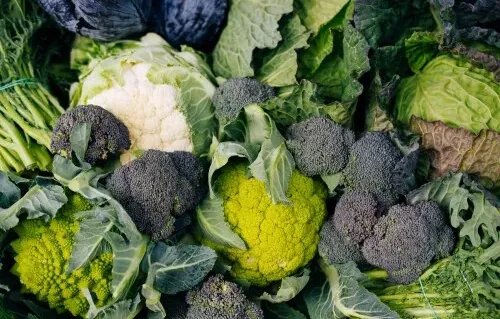
In a study conducted at Institut Curie, the group of Dr. Elodie Segura, Inserm Research Director, was interested in one nutrient in particular: indole-3-carbinol, a molecule present in large quantities in cruciferous vegetables (cabbage, broccoli, cauliflower, watercress, turnips, arugula, radishes, etc.). In order to evaluate their role, the researchers compared the effectiveness of an immunotherapy in animals that had received two different diets: one containing indole-3-carbinol and the other one - without it. With indole-3-carbinol, the anticancer treatment has proven to be effective in 50 to 60% of animals. On the other hand, when indole-3-carbinol is eliminated, the effectiveness of the treatment decreases to 20%. "These results show us that when we remove this compound present in cabbages, there is a drastic decrease in the effectiveness of anti-PD1 immunotherapy," summarizes Dr. Elodie Segura.
Cytotoxic T lymphocytes, pivot of the mechanism
It is known that cancer cells are capable of inactivating the cells of the immune system, thus preventing the cancer from being attacked by cytotoxic or "killer" cells. However, immunotherapy treatments, by anti-PD1 immune checkpoint inhibitor, counteract the inhibition by cancer of cytotoxic T cells and allows them to reactivate. Thanks to this treatment, the cytotoxic T lymphocytes that are reactivated become able to recognize the tumor cells and destroy them.
The researchers managed to identify the mechanisms of action of indole-3-carbinol at play in immunotherapy. They have thus demonstrated that indole-3-carbinol binds to a transcription factor called Aryl Hydrocarbon Receptor (AhR), in particular expressed in cytotoxic T lymphocytes .
In the absence of indole-3-carbinol, cytotoxic T lymphocytes are unable to respond to treatment. "Normally, during an anti-PD1 immunotherapy, the lymphocytes are stimulated and reactivated to detect tumor cells. However, in the absence of indole-3-carbinol in the diet, the lymphocytes are not able to recover their functions," continues to explain Elodie Segura.
"Our work makes it possible to better understand the role of nutrients in anti-tumor immune responses. For patients, these data could make it possible to optimize diets in order to ensure the effectiveness of treatments.” While waiting for these results to be confirmed through dedicated clinical studies, cancer patients are encouraged to follow nutritional recommendations and their doctor’s advice.
Reference : Physiological activation of Aryl Hydrocarbon Receptor by food-derived ligands is essential for the efficacy of anti-PD1 therapy. lba De Juan, Alice Coillard, Adeline Cros, Alessandra Rigamonti, Lamine Alaoui, Julio L Sampaio, Natacha Monot, Aurélie Balvay, Anne Foussier, Mathilde Rieux-Laucat, Léa Guyonnet, Sylvie Rabot, Christian Vosshenrich, Elodie Segura. Nature Communications, https://www.doi.org/10.1038/s41467-025-66854-x