- Home >
- Institut Curie News >
- Le Point's 2026 Inventors Ranking: six doctors and researchers from Institut Curie honored
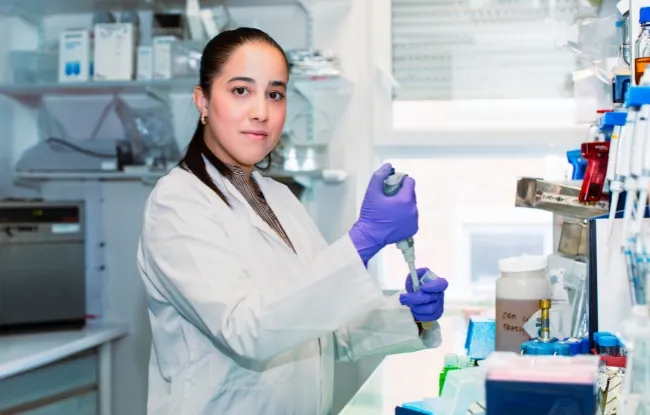
Every year, Le Point magazine recognizes the most innovative personalities in its Inventors Ranking. The 2026 edition highlights six doctors and researchers from Institut Curie. Their work, at the crossroads of basic research and healthcare, has led to cutting-edge innovations that are likely to change the lives of millions of patients.
The fifth edition of Le Point’s Inventors Ranking celebrates those who are pushing the boundaries of innovation. Selected by an exceptional jury, the 2026 class honors visionary scientists who draw on basic research and healthcare to shape the medicine of tomorrow and transform the lives of millions of people.
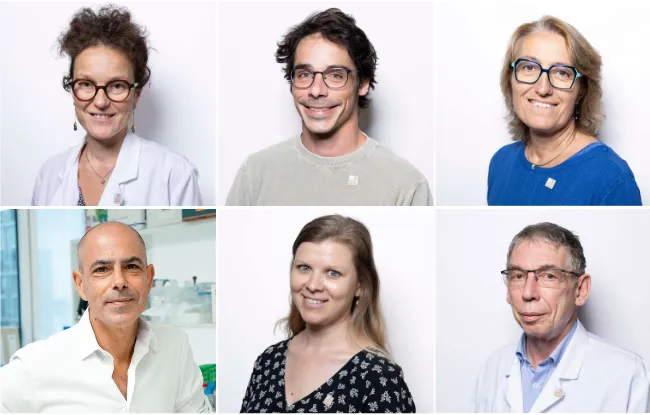
Institut Curie is delighted to see six of its researchers and doctors among the 100 winners of this prestigious ranking, recognizing the spirit of innovation and entrepreneurship of its teams.
Dr. Sarah Watson: diagnosing cancers of unknown origin using AI
A multiple award winner, Dr. Sarah Watson, an oncologist specializing in sarcomas, researcher, and head of the Early Clinical Trials Department at Institut Curie, is behind work that has transformed our understanding of cancers of unknown primary (CUP), also known as cancers of unknown origin.
These rare and difficult-to-treat cancers account for between 2 and 3% of cancer cases in France, or around 7,000 patients per year. In 2021, Dr. Sarah Watson and her team developed an AI-based diagnostic tool capable of identifying the origin of these cancers based on their molecular profile. Initially developed for research purposes, this cutting-edge technology is now integrated into routine clinical practice and is available to all patients in France. In approximately 70% of cases, the tool can determine the tissue of origin of the tumor and help guide patients toward appropriate treatment.
From bacteria to immunotherapy: the revolutionary discoveries of Dr. Enzo Poirier
Honored by the French Academy of Sciences in 2025, Dr. Enzo Poirier, Inserm research scientist and head of the Innate Immunity in Physiology and Cancer team1 at Institut Curie, specializes in the study of genes involved in immunity, most of which remain unknown.
By comparing the evolutionary history of bacterial and human proteins, Dr. Enzo Poirier, in collaboration with Dr. Aude Bernheim at Institut Pasteur, became interested in the antiviral mechanisms of bacteria, known as “antiphage systems.” Recent work describing the conservation of these systems in humans prompted the two researchers to investigate this “ancestral immunity” shared by bacteria and humans. Using genomic and phylogenetic approaches2, they developed a novel method inspired by bacterial immune systems. This unique technique makes it possible to identify new human immune genes and thus discover new therapeutic targets. Bacteria could hold the key to the immunotherapies of tomorrow.
Drs. Antonin Morillon and Olivier Lantz explore the “dark genome” to create universal anticancer vaccines
Dr. Antonin Morillon, CNRS research director and head of the Genetic Information Dynamics: Fundamental Bases and Cancer (DIG-CANCER)3 unit at Institut Curie, and Dr. Olivier Lantz, director of the Clinical Immunology Laboratory at Institut Curie and developer of a vaccine against uveal melanoma, were honored for their work, which led to the creation in 2023 of Cereus Biosciences, co-founded and led by Jean-Pascal Tranie.
Based on Dr. Morillon’s pioneering research on the “dark genome”—the 98% of DNA long considered non-coding—Cereus draws on multidisciplinary expertise to develop ready-to-use anticancer vaccines. The startup was also co-founded by Prof. Daniel Gautheret, an expert in computational genomics and team leader at the Institute for Integrative Cell Biology4, who is also a winner of the Innovators Ranking.
Thanks to unique algorithms, the company overcomes the constraints of personalization, making these vaccines accessible to as many people as possible. A first clinical trial is planned for 2027 for patients with pancreatic cancer.
A molecule developed by Dr. Florence Mahuteau-Betzer will soon be available to patients
Innovative research conducted by Dr. Florence Mahuteau-Betzer, CNRS research director and head of the Chemistry and Modeling for Biology of Cancer Unit5 at Institut Curie, led to the creation of the startup Abivax in 2009, which specializes in treatments for chronic inflammatory diseases.
Its flagship product, obefazimod, developed from a screening of Institut Curie’s chemical library, also overseen by Dr. Mahuteau-Betzer, has recently successfully completed multiple phases of clinical trials. In 2025, Abivax announced positive results from its Phase 3 trials, opening major therapeutic prospects for millions of patients with inflammatory bowel diseases, which remain difficult to treat.
Dr. Marie Verbanck: deciphering the genetics of cancer for personalized medicine
Inserm Junior Professor Chair in the Computational Oncology Unit at6 Institut Curie, Dr. Marie Verbanck was awarded the Irène Joliot-Curie Prize in the “Young Female Scientist” category in 2024, jointly awarded by the Ministry of Higher Education, Research, and Space and the Academy of Sciences.
A specialist in statistical genetics, Dr. Marie Verbanck develops innovative statistical tools aimed at deciphering the genetic architecture of cancers and other complex diseases. By shedding light on the biological mechanisms underlying these pathologies, her research contributes to a better understanding of risk factors and paves the way for more targeted treatments, promoting the emergence of increasingly personalized medicine.
[1] Immunity and Cancer unit (Inserm U932)
[2] The field of genetics that deals with genetic modifications in animal or plant species.
[3] (CNRS UMR3244)
[4] (I2BC Université Paris-Saclay / CNRS / CEA)
[5] (UMR9187 / U1196 CNRS / Inserm / Université Paris Saclay)
[6] (U1331 Inserm)