- Home >
- Institut Curie News >
- Dr. Fanny Orlhac, new team leader in the IRIS unit
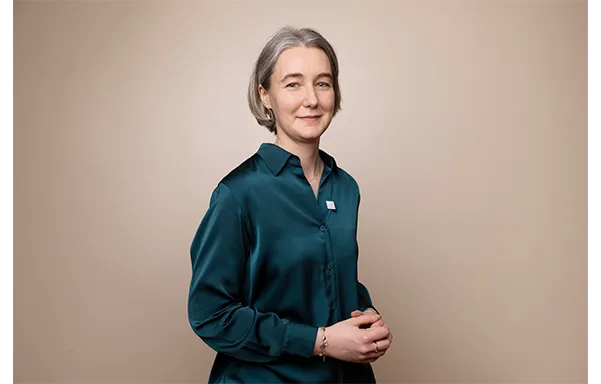
Since January 2026, Dr. Fanny Orlhac, a specialist in medical imaging, has been leading a team in the new Imaging, Innovative Radiotherapy, and Systems Medicine Unit (IRIS – Institut Curie / CNRS UMR9029 / Inserm U1353 / Université Versailles Saint-Quentin) at Institut Curie, led by Dr. Irène Buvat.
Dr. Fanny Orlhac, an Inserm research fellow, leads a new team called Integrative Radiomics for Precision Medicine (RADIOME) at Institut Curie. There, she is exploring how to make better use of patients’ medical images throughout their care.
Since January 2026, this team has been part of the new Imaging, Innovative Radiotherapy, and Systems Medicine Unit (IRIS – Institut Curie / CNRS UMR9029 / Inserm U1353 / Université Versailles Saint-Quentin), led by Dr. Irène Buvat.
Interview
Question : Dr. Fanny Orlhac, can you tell us about your career path?
Dr. Fanny Orlhac: I completed my PhD in physics, specializing in medical imaging, in Dr. Irène Buvat’s laboratory while she was affiliated with Paris-Sud University. It was during this time that I became interested in PET imaging, a technique that allows us to quantify metabolic activity in different regions of the body, including tumor lesions, providing insights into the dynamics of disease progression. In clinical practice, the images are analyzed visually by nuclear medicine physicians, and few indicators are available on their imaging console to capture all their complexities. My work therefore consisted of developing and testing new metrics to extract more information from these images. After defending my thesis in 2015, I continued in this direction with two postdoctoral fellowships: one at Paris-Saclay University, as part of the Lidex PIM —Physics and Engineering for Medicine, in partnership with Gustave Roussy—and then a second at Inria Sophia Antipolis-Méditerranée, near Nice, where I trained in mathematical modeling and artificial intelligence methods. I then passed the Inserm competitive exam in 2019 to become a research fellow and joined Dr. Irène Buvat’s laboratory.
Question: Can you explain how your work is organized at Institut Curie?
Dr. Fanny Orlhac: I joined Institut Curie in 2020 as part of Dr. Irène Buvat’s team, where we have developed our research within a framework structured around several complementary areas of focus. In early 2026, with the establishment of the new IRIS unit, these areas were organized into different specialized teams, bringing together diverse expertise to advance our understanding and treatment of cancer at the whole-body level. I thus took on the leadership of the Integrative Radiomics for Precision Medicine (RADIOME) team, which is fully aligned with this collective effort and works closely with other areas of the unit, such as imaging, radiation therapy, and translational approaches.
Question: What are the main areas of research you hope to develop?
Dr. Fanny Orlhac: Our work within the team builds on research already underway before the new unit was established, focusing on advanced medical image analysis. The overall goal is to make better use of these images, whether they are obtained via CT, MRI, PET, or ultrasound. Patients undergo a number of these procedures during their course of care. These are underutilized in current practice. Our work consists of extracting new quantitative and reproducible indicators that convey clinically relevant information, particularly to better characterize tumors, understand their progression, and anticipate patients’ responses to treatments.
Question :How do you do that?
Dr. Fanny Orlhac: We use artificial intelligence algorithms to extract information, analyze it, and combine it with other data such as clinical indicators and the results of biological, histological, or genomic tests. This allows us to build predictive or prognostic models to aid in patient care. For example, we can identify certain factors that help with patient stratification—that is, classifying patients based on their profile or their likely response to treatment.
Question : So you work very closely with the doctors?
Dr. Fanny Orlhac: Absolutely, and that’s what makes working at Institut Curie so exciting. For now, our team is based in Orsay, but we’ll soon be moving to Saint-Cloud, bringing us closer to the clinical work with which we’re deeply involved. That’s also what makes the new IRIS unit unique—it includes many medical doctors. The back-and-forth between our different disciplines is invaluable to our research. We always keep clinical applications in mind, with the goal of improving patient care.