- Home >
- Institut Curie News >
- Metastatic ocular melanomas: A promising approach through the combination of two targeted therapies
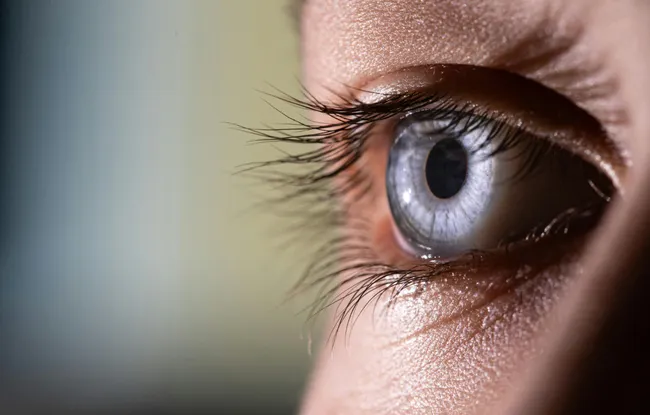
Uveal melanoma is a rare cancer that affects the uvea, the pigmented membrane inside the eye that includes the choroid (the tissue covering the retina), the iris, and the ciliary body. It is the most common malignant tumor of the eye in adults. Uveal melanoma primarily affects Western populations of European descent, particularly people in their sixties with fair skin and light-colored eyes.
Among rare cancers, the treatment of uveal melanoma at the metastatic stage remains a key therapeutic issue, with a crucial need for new treatment options. The first results of efficacy and tolerance of a combination of two targeted therapies are presented at the ASCO congress, from the OptimUM-02 study led by Dr. Sophie Piperno-Neumann, medical oncologist at Institut Curie.
With about 500 new cases per year in France, uveal melanoma is the most common eye cancer in adults. When diagnosed at an early stage, this rare cancer is usually treated successfully. However, almost half of the patients develop metastases (mainly in the liver), thus limiting the therapeutic options and the prognosis. The national and European reference center for uveal melanoma, Institut Curie takes care of about two thirds of new cases in France and is recognized internationally for its leading expertise on this type of cancer.
OptimUM-02: testing the synergy of a combination of targeted therapies
To date, there is only one drug approved to treat metastatic uveal melanoma: Tebentafusp. This innovative immunotherapy (a bispecific antibody) improves survival but only half of the patients can receive it (more precisely those with a specific serotype: HLA-A*02:01, essential to trigger this anti-melanoma immunity). For patients who are not eligible for Tebentafusp, there is currently no reference systemic treatment.
Results from the OptimUM-02 study, conducted in patients with metastatic uveal melanoma ineligible for tebentafusp, are being presented at an oral session at ASCO 2026. Coordinated in France by Dr. Sophie Piperno-Neumann, medical oncologist at Institut Curie, this Phase 3 trial aims to evaluate the combination of two targeted therapies involved in the proliferation and invasion of tumor cells: Darovasertib, a protein kinase C inhibitor, and Crizotinib, a Met inhibitor.
Promising survival results but noticeable digestive toxicity
"Institut Curie teams participated in the preclinical studies which made it possible to take the necessary steps to continue the studies at the clinical stage, and we are very satisfied today to be able to present the first efficacy and safety results of the OptimUM-02 study," explains Dr. Sophie Piperno-Neumann. The main objective of the Phase 2 portion of the study is on progression-free survival: the results report a median progression-free survival of 7 months, which is double that obtained with any other drug in this situation.
"The preliminary overall survival data show an improving trend at this stage, but we will have to wait for the more mature results of Phase 3 within a year." The only drawback of this combination is relatively frequent gastrointestinal toxicity (primarily diarrhea and nausea), though it is most often low-grade. "This new combination of two drugs is therefore proving interesting in the treatment of metastatic melanoma in patients not eligible for Tebentafusp and also opens up promising prospects at earlier phases of the disease. Currently, Darovasertib is being tested in a Phase 3 study in a neoadjuvant situation with the goal of preserving the vision of the affected eye and reducing the side effects of radiation therapy. In addition, a trial in an adjuvant situation is planned in order to reduce the risk of metastatic relapse in patients at high risk of recurrence," concludes Dr. Sophie Piperno-Neumann.
Darovasertib plus crizotinib vs investigator’s choice as first-line treatment for patients with HLA-A2 negative metastatic uveal melanoma: Primary results from the OptimUM-02 trial.
=> Oral Abstract Session Melanoma/Skin Cancers, 1er juin 2026, Dr Sophie Piperno-Neumann
In metastatic uveal melanoma, other works led by Dr. Toulsie Ramtohul, radiologist at Institut Curie, are presented at ASCO. They show that the quantitative analysis of the MRI, by measuring the total volume of liver metastases and their growth rate under treatment, could help to predict the evolution of certain patients with metastatic uveal melanoma (treated with Tebentafusp) more accurately and at an earlier stage, in addition to the conventional imaging criteria and circulating tumor DNA.