- Home >
- Institut Curie News >
- Dr. Raphaël Ceccaldi named 2025 Impulscience laureate by the Fondation Bettencourt Schueller
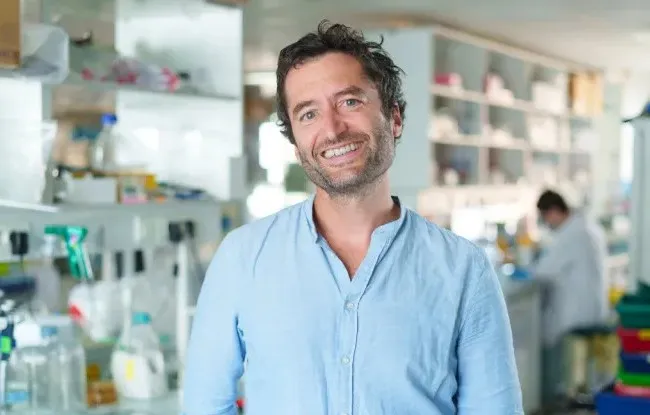
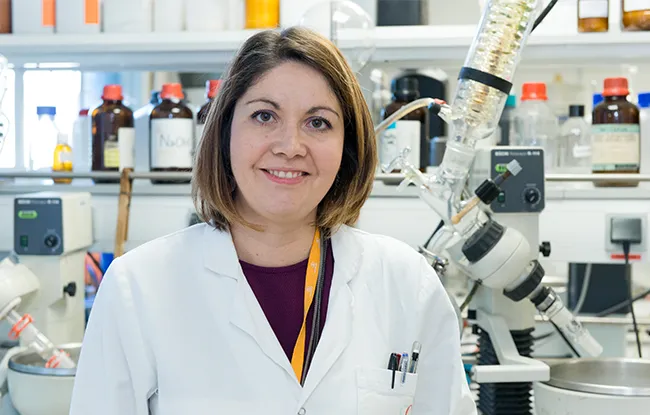
On December 2nd, the Fondation Bettencourt Schueller announced the seven laureates of its 2025 Impulscience program, among them Dr. Raphaël Ceccaldi, Inserm Research Director and research team leader at Institut Curie. The five-year, 2.3-million-euro award will enable his team to push further their investigations into DNA repair during mitosis, a key process for understanding the vulnerabilities of certain tumors.
“I am truly delighted and honored to receive this support. For my team and myself, it opens up possibilities we simply could not reach before,” says Dr. Raphaël Ceccaldi.
At Institut Curie, his group focuses on the most harmful DNA lesions: double-strand breaks that affect both strands of the double helix. These breaks arise during routine cellular processes, such as replication, or in response to environmental stress. When they are not accurately repaired, they undermine genome stability and contribute to the development of cancer. Understanding how cells counter these threats is therefore essential to uncovering the origins of many tumors.
“In recent years, we discovered that some tumor cells reactivate an unexpected DNA repair pathway during mitosis,” explains Dr. Raphaël Ceccaldi. “This pathway relies on DNA polymerase theta (Polθ), an enzyme that can rejoin DNA when conventional systems fail, allowing these cells to survive under extreme conditions.”
These findings, published in Nature on September 6, 2023, showed that Polθ can operate during mitosis, a stage long considered incompatible with DNA repair. The team also demonstrated that this mechanism is particularly exploited in certain breast and ovarian cancers.
With the Impulscience award, Dr. Ceccaldi’s laboratory will be able to explore these mechanisms at an unprecedented level of detail. A high-resolution microscope will allow the team to track, throughout mitosis, how DNA breaks form, how they are repaired, or not, and how they are passed on to daughter cells. The project also includes the recruitment of new collaborators to strengthen the interdisciplinary expertise needed to dissect these complex processes.
In the long term, this research aims to pinpoint new vulnerabilities in tumors with DNA repair defects, opening the way to more targeted therapeutic strategies.
Awarded by the Fondation Bettencourt Schueller since 2022, the Impulscience program supports innovative research projects in the life sciences. It is intended for researchers who obtained their PhD between 5 and 25 years prior to applying, work in a public research laboratory in France, and achieved an A-ranking in the Starting, Consolidator or Advanced Grant evaluations of the European Research Council (ERC). Each selected project receives up to 2.3 million euros over five years. Seven projects are funded annually.
Dr. Chunlong Chen was the first Institut Curie researcher to be awarded an Impulscience grant in 2022, for his work on DNA replication and genomic transcription.
Dr. Alexandre Baffet was recognized in 2023 for his research on neocortex development and neural stem cell biology.