- Home >
- Institut Curie News >
- Digestive cancers: Institut Curie explores new therapeutic avenues by deciphering the tumor microenvironment and body composition
Among the advances presented by Institut Curie at the 2026 ESMO Congress, the results of studies on pancreatic cancer and bile duct cancer confirm the value of new areas of research.
Pancreatic cancers: understanding the role of the tumor microenvironment in the aggressiveness of the disease and the response to treatment
At Institut Curie, several teams are studying cancer-associated fibroblasts, cells in the tumor microenvironment that can influence disease progression and response to treatment. In pancreatic cancer, researchers have highlighted the role of periostin-expressing fibroblasts in the tumor microenvironment as being associated with a poor prognosis. Periostin is an extracellular matrix protein capable of acting on certain intracellular signaling pathways. By analyzing a cohort from the PRODIGE 24 trial, researchers at Institut Curie reveal that the presence of these periostin-expressing fibroblasts is associated with tumors having more aggressive molecular characteristics, an immune environment dominated by macrophages, and an unfavorable prognosis.
These studies confirm a particularly important research avenue in pancreatic cancer: that of better characterizing and better understanding the tumor microenvironment. In the long term, this research aims to decipher the mechanisms of resistance to treatments, but above all, it could ultimately contribute to the development of therapeutic strategies better suited to the characteristics of each tumor.
Tracking changes in body composition as a prognostic indicator in biliary tract cancers
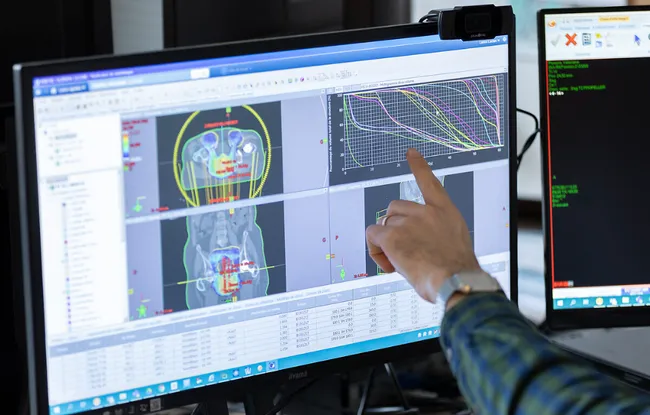
Muscle mass, fat mass, and the density of muscle and adipose tissue are the body composition parameters measured by scanners. "More and more studies are devoted to body composition, to the impact of muscle and adipose tissue on treatment efficacy, but usually, it is studied at a specific moment. However, the originality of our work lies in an analysis of body composition over time, and our results are particularly interesting," explains Dr. Matthieu Delaye, a medical oncologist at Institut Curie.
An ancillary study was conducted using data from the IMMUNOBIL GERCOR D18-1 PRODIGE-57 trial, which investigated immunotherapy treatment in patients with biliary tract cancers. The results show that muscle or fat loss, assessed early after the start of CT scan treatment, is associated with poorer patient survival, independently of tumor progression. This work argues for a systematic study of body composition in addition to tumor evaluation on already performed scans in patients, in order to assess and better understand patient prognosis, and to modify oncological treatment more quickly.
"By demonstrating that changes in body composition are an additional marker of tumor progression, we reinforce the clinical interest in a comprehensive approach that explores the interactions between the tumor, metabolism, organs, and the patient's overall condition. The development of systems medicine, a holistic, individualized approach that considers the individual in all their complexity, is booming and receiving a great deal of attention at Institut Curie," concludes Dr. Matthieu Delaye.
Periostin (POSTN)-expressing pancreatic cancer-associated fibroblasts (CAFs) define a distinct niche associated with tumor aggressiveness and therapeutic response: evidence from PRODIGE 24 trial– Dr Marc Hilmi – Poster session pancreatic cancer
Early changes in body composition independently predict survival in patients (Pts) receiving immunotherapy for biliary tract cancers (BTC): an ancillary study of the IMMUNO-BIL PRODIGE 57 GERCOR trial – Dr Matthieu Delaye – poster session biliary tract cancer