- Home >
- Institut Curie News >
- Institut Curie at the ESMO 2026 Congress
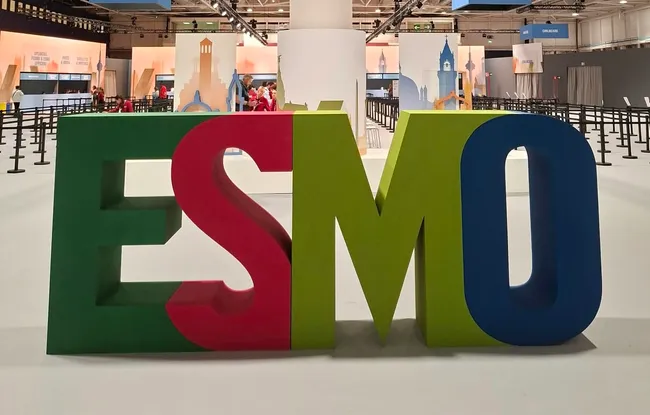
The European Society for Medical Oncology (ESMO) congress is taking place in Madrid, Spain, from October 23 to 27, 2026. 37,000 participants from 174 countries, 213 sessions, and 5,677 abstracts submitted: this major annual oncology event brings together global oncology experts, including physicians and researchers from Institut Curie. They will share their promising results, innovations, and expertise to accelerate discoveries for the benefit of patients.
"ESMO marks an important and exciting moment in European and global oncology, for which researchers and physicians from Institut Curie are strongly mobilizing,” states Prof. Steven Le Gouill, Director of Hospitals at Institut Curie. This is a unique moment to showcase our teams' research, compare clinical practices, and share the latest medical advancements, as well as strengthen our international collaborations. With the same goal as always: to accelerate innovation and offer all our patients the best care available."
Prof. Steven Le Gouill director of Institut Curie hospitals
The key takeaways from this 2026 edition:
Lung cancer: adaptive oncology at the heart of Institut Curie's work, for better patient care
- Results of the SAFFRON study presented in a presidential session - Bypassing treatment resistance by combining two targeted therapies: towards a change in practice in certain lung cancers
- An original study to understand the mechanism of action and adaptation of antibody-drug conjugates
Female cancers: Institut Curie's pioneering expertise in circulating biomarkers and real-world studies
- Real-world data, a major lever for improving the care of very rare breast cancers
- HPV-related cancers: detecting circulating tumor DNA from papillomavirus to track recurrences
Cancers of unknown primary: Institut Curie takes on the challenge of treating metastases without knowing the primary tumor
Digestive cancers: Institut Curie explores new therapeutic avenues by deciphering the tumor microenvironment and body composition
- Pancreatic cancers: understanding the role of the tumor microenvironment in disease aggressiveness and treatment response
- Tracking changes in body composition as a prognostic indicator in biliary tract cancers