- Home >
- Institut Curie News >
- Dr. Christophe Lamaze elected to the French National Academy of Medicine
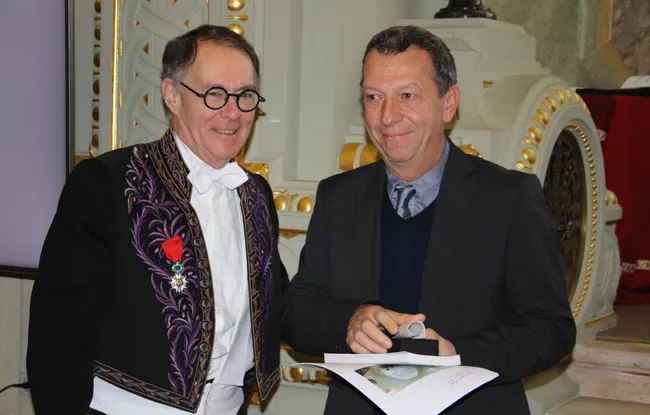
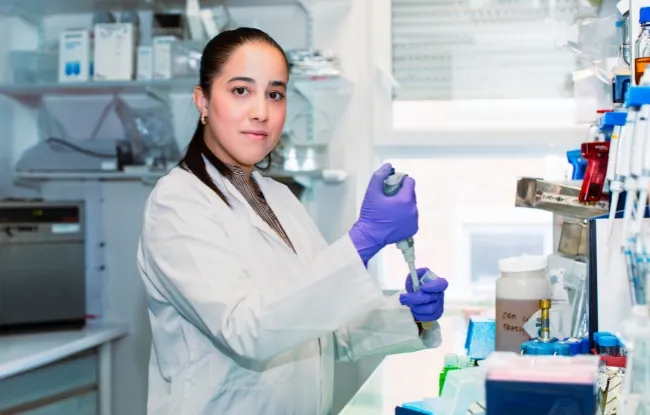
Dr. Christophe Lamaze, Inserm Research Director and research team leader at Institut Curie, was elected corresponding member of the French National Academy of Medicine on January 6. A cell biologist, he has spent many years studying how cells transmit signals and adapt mechanically. These mechanisms lie at the heart of cancer and many other diseases, work that is now recognized by the Academy.
On January 6, Dr. Christophe Lamaze joined the French National Academy of Medicine as a corresponding member, within the 3rd division of Biological and Pharmaceutical Sciences. For him, the election represents recognition by his peers.
“It is obviously a source of pride. Being elected to an institution like this means feeling that your career and your work have truly mattered,” he says.
Trained as a medical biologist and pharmacist, and a former resident in the Paris public hospital system, he has always worked at the interface between fundamental research and medicine. At Institut Curie, he leads the Membrane Mechanics and Dynamics of Intracellular Signaling team (Inserm U1339 / CNRS UMR3666), where he studies how cells organize their membranes to communicate with one another.
His research has notably shown that some signaling mechanisms, such as the JAK/STAT pathway involved in many diseases, are not limited to the surface of the cell. They also unfold inside the cell, within compartments known as endosomes. This perspective has helped shed new light on the complexity and dynamics of cellular signaling.
More recently, his team has been investigating the role of caveolae, small pockets at the surface of cells that help them absorb mechanical stress when they are stretched or compressed, for example within solid tumors.
Far from being incidental structures, caveolae play a key role in cellular regulation and are involved in processes such as the spread of cancer cells.

Within the Academy, Dr. Christophe Lamaze hopes to advocate for the importance of fundamental research in scientific and public health debates.
“Medicine progresses when disciplines interact. We need to build bridges between fields that sometimes do not speak to each other enough,” he explains.