- Home >
- Institut Curie News >
- The Immunity and Cancer research unit (U932) celebrates its twentieth anniversary
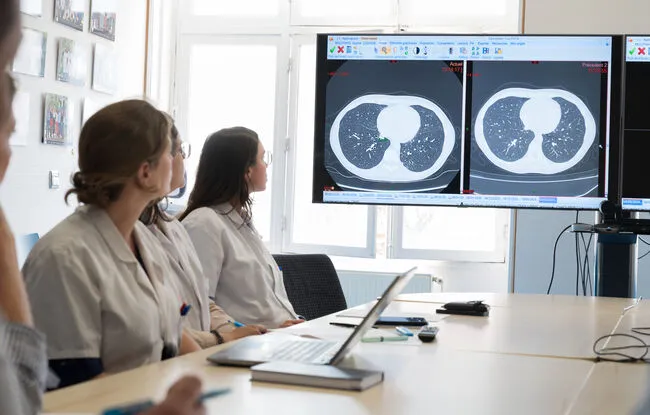
At the crossroads of the laboratory and the patient’s bedside, the Immunity and Cancer research unit (Inserm U932) was created in 2005 through the merger of two immunology units at Institut Curie (U520 and U653). Built on a shared way of working and close ties with clinicians, it now brings together 11 research teams dedicated to cancer immunology.
The history of the unit begins in the 1990s, when Institut Curie launched a scientific reorganisation to strengthen its links between fundamental and clinical research. The Constant-Burg building in Paris was restructured and became a major hub for new teams, including several in immunology.
“We needed to restore immunology to its rightful place in the fight against cancer by building on new knowledge in cell biology, and to reaffirm the international leadership of Institut Curie in this field,” recalls Prof. Daniel Louvard1, alors directeur du Centre de recherche.
In 2001, two Inserm immunology research units were created at Institut Curie: U520, led by Dr Sebastian Amigorena2 at the Research Center and focused on the fundamental mechanisms of the immune response; and U653, led by Dr. Christian Bonnerot, oriented towards clinical applications and based within the Hospital Group. These two entities rapidly developed complementary approaches to understanding immunity in cancer. In 2005, following the passing of Dr. Bonnerot, Inserm and Institut Curie decided to merge both units into a single structure: the Immunity and cancer unit (Inserm U932).
“This consolidation was based on a shared vision: pooling resources, encouraging exchanges, and establishing a continuum between fundamental research, translational research and clinical development at Institut Curie. Over the years, building on a strong foundation of basic science, the unit has expanded towards translational and clinical research,” notes Dr. Sebastian Amigorena, its founding director.
Teams led by physician–scientists joined U932, bringing a clinical culture and challenges drawn directly from patient care.
“Two milestones were decisive: the strengthening of the translational axis with the arrival of teams oriented towards clinical research, and the creation of the Cancer Immunotherapy Center in 2018,” continues Dr. Sebastian Amigorena.
Located at the heart of the Hospital Group of Institut Curie in Paris, this center brings together research laboratories, consultation rooms and inpatient beds on the same floor, creating a shared environment for direct exchanges between researchers, physicians, patients and caregivers. This unique model fosters close interactions and accelerates the transition from fundamental discoveries to clinical practice, while generating new research questions directly inspired by medical experience.
“Immunology occupies a strategic place today in the fight against cancer. Understanding how the immune system interacts with tumors remains one of the major scientific and medical challenges of our time. The Immunity and Cancer unit contributes in an essential way to this mission, through the richness of its approaches and the strength of its collaborations,” highlights Dr. Claire Rougeulle3, Director of the Research Center.
U932 has also chosen to share its expertise by contributing to the structuring of the CurieCoreTech platforms Extracellular Vesicles and Cytometry (CYTPIC), now serving researchers across Institut Curie.
Today led by Dr Ana-Maria Lennon-Duménil4, U932 gathers 11 research teams and more than 120 members, spread between the Constant-Burg building and the Hospital Group in Paris. The unit covers a broad range of topics: dendritic cells, T lymphocytes, innate immunity, extracellular vesicles, tumor microenvironment…
“For twenty years, the unit has pursued a strong conviction: only by deepening our understanding of the fundamental mechanisms of immunity will we be able to imagine new ways of treating cancer. Our ambition is to decipher interactions between immune cells, microorganisms and tumor cells at different scales, to understand how tumors shape disease progression, and to use this knowledge to design the therapeutic strategies of tomorrow,” concludes Dr. Ana-Maria Lennon-Duménil.
[1] Emeritus CNRS Research Director, and Director of the Research Center of Institut Curie from 1993 to 2013.
[2] CNRS Research Director, Director of the Immunity and Cancer unit (Inserm U932) from 2005 to 2021, and head of the Immune responses and cancer team
[3] Director of the Research Center of Institut Curie, CNRS Research Director, and head of the Sex chromosomes, development and diseases team
[4] Inserm Research Director, Director of the Immunity and Cancer unit (U932), and head of the Spatio-temporal Dynamics of Immune Cells team