- Home >
- Institut Curie News >
- IMPACT: the research team bridging pathology, preclinical models and imaging
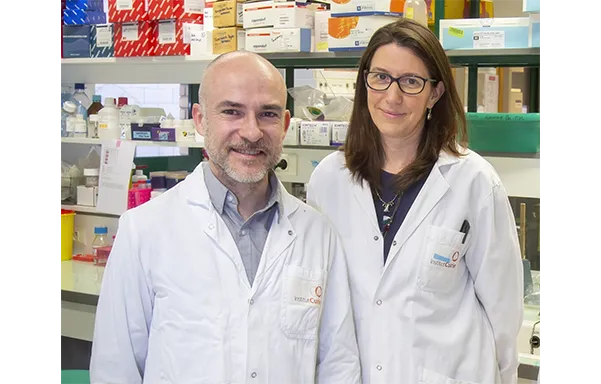
Born from a long-standing collaboration between fundamental research, pathology and clinical practice, the IMPACT team joined the new IRIS unit in early 2026. Led by Prof. Yves Allory and Dr. Isabelle Bernard-Pierrot, the team develops an integrated approach to urological cancers, from tumor tissues to preclinical models, to better understand their evolution and resistance to treatment.
Behind the acronym IMPACT lies the team’s full name: Integrative Molecular Pathology And pre-Clinical Testing. Integrated within the Imaging, Innovative Radiation Therapy, and System Medicine (IRIS) unit (CNRS UMR9029/Inserm U1353/Université Versailles Saint-Quentin), directed by Dr. Irène Buvat, the team is based across the Paris and Saint-Cloud sites. It builds on several years of research at Institut Curie focused on urological cancers, particularly bladder cancer.
This story first took shape within the Molecular Oncology team, part of the Cell Biology and Cancer Unit (CNRS UMR144 / Sorbonne University), long lead by Dr. François Radvanyi, now a CNRS emeritus researcher. It was there that Dr. Isabelle Bernard-Pierrot joined the team in 2002 as a postdoctoral fellow to work on FGFRs, a family of receptors involved in certain bladder tumors. Her research later expanded to functional genomics, gene regulatory networks, tumor plasticity, and interactions with the tumor microenvironment.
Prof. Yves Allory joined this scientific trajectory in 2005. A pathologist and specialist in urological cancers, he began collaborating with the team from Henri Mondor Hospital in Créteil. His contribution was complementary: linking molecular analyses to human tumor tissues, patient cohorts, and clinically relevant questions. In 2017, he joined Institut Curie as head of the Pathology Department in Saint-Cloud while continuing his research activities within the Molecular Oncology team.
Over time, their paths converged around a shared ambition: understanding tumors through their biological mechanisms while remaining closely connected to samples, physicians, and patients.
“We constantly strive to maintain this highly integrated vision: conducting fundamental research based on tumor samples, while also being able to bring our discoveries back to the patient when they may have therapeutic applications,” explains Dr. Isabelle Bernard-Pierrot.
“Isabelle contributes expertise in mechanistic studies, functional genomics, and preclinical models; I contribute the link to tumor tissues, as well as the analysis and integration of morphological, transcriptomic, and genomic data,” adds Prof. Yves Allory.
In 2025, Prof. Yves Allory and Dr. Isabelle Bernard-Pierrot jointly took over leadership of the Molecular Oncology team. One year later, the creation of IMPACT within IRIS marked a new chapter.
Within a unit that studies cancer across multiple scales, from the whole organism down to tissues and cells, IMPACT contributes expertise in molecular pathology, ex vivo imaging, and preclinical models. This position is first reflected in the development of pathomics tools, which use artificial intelligence to quantitatively analyze images of tumor tissues. The aim is to extract information that may be difficult to detect with the naked eye and combine it with molecular and clinical data.
It is also reflected in the development of complex bladder organoids , which take into account not only tumor cells but also part of their immediate environment. These models are designed to help better understand what drives tumor evolution, what makes tumors more plastic, and what may promote resistance to treatment.
To address these questions, IMPACT relies on several collaborations within Institut Curie, notably with Dr. Hélène Salmon's team on the tumor microenvironment and immune response, as well as with Dr. Thomas Walter's team on AI-based analysis of microscopic images. The team also works with the CurieCoreTech, Géénomique and CRISPR’it Genetic Screening, platforms, two important resources for linking molecular data with experimental models. For IMPACT, this is a way to bring pathology, biology, and imaging together in support of research that remains closely connected to the mechanisms observed in patients.