- Home >
- Institut Curie News >
- Dr. Sarah Watson to Lead a New Junior Research Team Focused on Sarcomas and Cancers of Unknown Primary
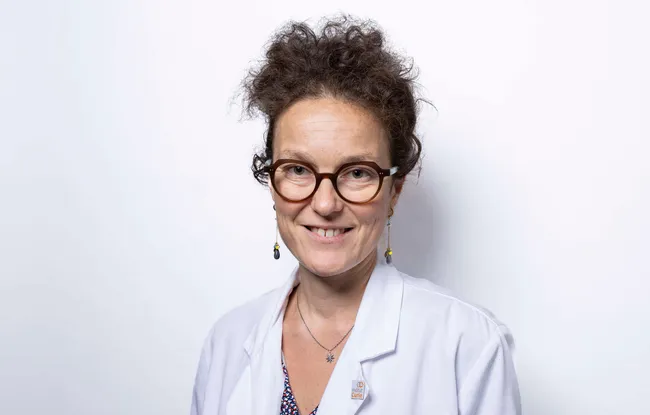
Developed over several years at Institut Curie, Dr. Sarah Watson’s research activities are entering a new phase with the creation of her own research team dedicated to sarcomas and cancers of unknown primary. A medical oncologist and researcher, she is driven by a clear ambition: to turn questions arising from patient care into scientific and therapeutic advances.
Medicine and research have been closely intertwined throughout Dr. Sarah Watson’s career. After completing a dual degree program in medicine and science at the École normale supérieure, she specialized in medical oncology while pursuing a PhD. In 2017, she joined Institut Curie as a clinical fellow through the CCA Inserm Bettencourt program, which enabled her to pursue clinical practice and scientific research simultaneously.
In the unit now known as Children’s Oncology Research Unit (CONCERT) (Inserm U1330), she worked in Dr. Olivier Delattre's team on pediatric cancers, particularly sarcomas, rare cancers that develop in the body's connective and supporting tissues, such as muscles and bones. Together with Dr. Nadège Gruel, a research engineer in the team, she then initiated her own research on adult sarcomas.
“Little by little, we secured funding that allowed us to build a group around these new research areas,” explains Sarah Watson.
As both a physician and a researcher, Sarah Watson has authored or coauthored 75 scientific publications, which have received more than 4,000 citations. Her work has also earned her several distinctions, including the Gallet and Breton Prize from the French National Academy of Medicine in 2022, the Claude Jacquillat Prize in 2023 and, more recently, recognition as one of the 2026 NextGen Leaders in Health in the Academic Research category.
Toward Her Own Research Team
In 2025, Sarah Watson and her group joined the Chemical Biology of Cancer unit (Inserm U1339 / CNRS UMR3666), within Dr. Raphaël Rodriguez's team, with whom they were already collaborating on sarcoma research projects. It is within this unit that she is now establishing her own team, Rare Cancers Exploration and Research (RACER), as a Junior Principal Investigator (JPI).
The new team therefore focuses on two types of rare cancers: adult sarcomas and cancers of unknown primary. Their rarity makes both research and patient care more challenging, particularly by limiting the data available to better understand these diseases and develop new treatment strategies. For sarcomas, the team investigates their diversity to identify new therapeutic avenues. For cancers of unknown primary, in collaboration with the Computational Oncology research unit (Inserm U1331) and the CurieCoreTech Bioinformatics (CUBIC) platform, the team develops approaches based on data analysis and artificial intelligence. One example is TransCUPtomics, a tool that analyzes a tumor's gene expression profile to predict its tissue of origin. Used as part of the national multidisciplinary tumor board (MDT) coordinated by Institut Curie, this tool has benefited nearly 500 patients and helped identify the origin of their cancer in more than 70% of cases.
The team also draws on several platforms within Institut Curie's CurieCoreTech network particularly Bioinformatics (CUBIC), de Next Generation Sequencing (ICGex) and Laboratory of Preclinical Investigation (LIP), as well as BioHub to support the processing and analysis of patient samples.
When Clinical Practice Fuels Research
The creation of RACER does not change the other side of Sarah Watson’s daily work: she continues to practice as a medical oncologist at Institut Curie, treating patients with sarcomas and cancers of unknown primary. Her clinical practice directly informs the research conducted by her team.
“I’m fortunate to have protected research time at Institut Curie, which allows me to develop my scientific projects while continuing to practice as a medical oncologist. The questions we encounter when caring for patients drive our research and lead us to explore new approaches. The ultimate goal is to bring these advances back to patient care. It is this close connection between the hospital and the Research Center that makes our team unique,” she explains.
Supporting the Launch of New Research Teams
When establishing their teams, Junior Principal Investigators (JPIs) receive a startup package to help launch their research activities.
This support includes funding and personalized assistance, notably from a scientific writer who helps prepare European Research Council (ERC) grant proposals.
New research team leaders also have dedicated laboratory space and access to shared equipment, common resources and the Research Center's research support services.
This support, which also benefits Sarah Watson’s new team, is made possible thanks to the generosity of donors.
Photography © Institut Curie / Franck Beloncle