- Home >
- Institut Curie News >
- Curie Audace: four projects turning bold ideas into tomorrow’s breakthroughs
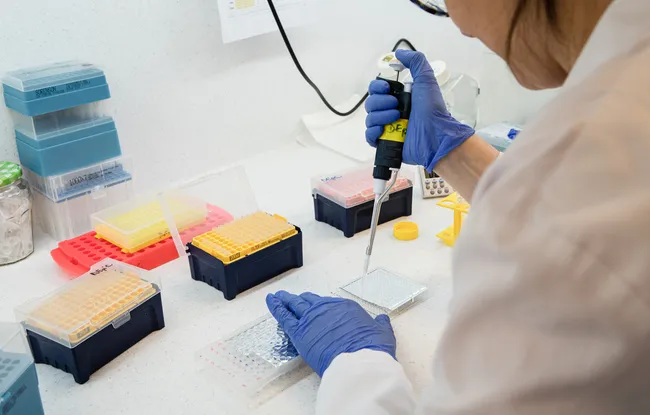
Launched in February 2026 by the Institut Curie Research Center, the Curie Audace Call for Proposals supports researchers in exploring original hypotheses, testing innovative concepts and developing new collaborations. For this first edition, four projects have been selected for funding. Thanks to the generosity of the public, each will receive up to €250,000 over two years to explore promising research avenues that remain largely uncharted.
“Some of the most exciting scientific questions do not fit easily within established frameworks. Addressing them often requires bringing together disciplines, approaches and expertise that do not traditionally work alongside one another. Curie Audace was designed to encourage precisely this kind of dynamic, which lies at the heart of the Curie 2030 Scientific Project and our ambition to strengthen interdisciplinarity across the Research Center,” says Dr. Claire Rougeulle, Director of the Institut Curie Research Center.
Curie Audace supports collaborative exploratory research projects built around innovative ideas or hypotheses involving conceptual or methodological risk and which may therefore fall outside traditional national or international funding schemes. The initiative immediately resonated with Research Center teams, with 21 projects submitted for its first edition. Four have been selected for funding, enabling the researchers to generate the first proof of concept results needed to strengthen future applications to external funding schemes and pave the way for more ambitious, long term research projects.
SABV in PDX: better accounting for sex in preclinical research
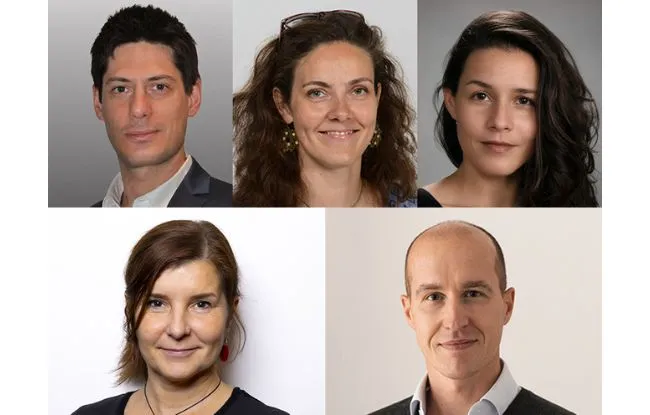
Coordinated by Dr. Virginie Dangles-Marie1 and bringing together Drs. Olivier Ayrault2, Manuel Rodrigues3 and Elisabetta Marangoni4, this project focuses on a biological variable that is still too often overlooked in research models: sex. Yet numerous clinical observations show that some cancers do not develop in the same way in women and men.
The researchers will study several types of cancer to determine the extent to which the sex of the host and that of the tumor cells influence tumor growth, the spread of cancer cells and treatment efficacy. This work could improve the interpretation of preclinical findings and help ensure that this biological variable is more systematically taken into account in future studies.
AGORA: artificial intelligence opening up new avenues for research
The rapid growth in the volume of biological, clinical and genomic data is creating unprecedented opportunities for research, while also making these data increasingly complex to harness.
Coordinated by Dr. Nicolas Servant5 and involving Dr. Sarah Watson6, Dr. Laurence Calzone7 and Julien Guérin8, the project is developing an artificial intelligence platform based on a multi agent approach.
The aim is to assess whether these systems can simultaneously analyze molecular, clinical and scientific data to help researchers formulate new hypotheses. The work will notably explore decision support for patients with metastatic cancers who have exhausted standard treatment options, as well as the identification of mechanisms underlying treatment resistance.
IRAMAC: using radiation therapy to act on cells with precision
Using radiation therapy not only to treat tumors but also to trigger targeted biological reactions is the ambition of this project, coordinated by Dr. Guillaume Bort9 together with Dr. Feng-Ching Tsai10.
The objective is to develop molecules capable of anchoring to the surface of cells only when activated by low doses of radiation. If this proof of concept is successful, ionizing radiation could become a tool for locally labeling and modifying cells, opening up possibilities for imaging-based tracking, targeted drug delivery or the localized activation of immune functions.
Understanding how tissues adapt throughout life
Our bodies are constantly exposed to physiological changes, whether related to diet, pregnancy or other changes over the course of life. Yet the mechanisms that enable tissues to maintain their function in the face of these changes remain poorly understood.
Coordinated by Drs. Danijela Matic Vignjevic11 and Louisiane Perrin12, with the participation of Drs. Yohanns Bellaïche13 and Boris Guirao14, the project aims to better understand the role of mechanical forces in this adaptive capacity. The researchers will investigate how these forces influence cell movement, organization and renewal to shed light on the mechanisms that allow tissues to adapt, as well as on certain disruptions observed in cancer and other diseases.
1 Veterinarian at the Institut Curie Research Center and Associate Professor at the Paris Faculty of Pharmacy/CurieCoreTech In Vivo Preclinical Experiments Platform.
2 CNRS Research Director and Director of the Children’s Oncology Research Unit (Inserm U1330) at Institut Curie.
3 Medical oncologist and head of the DNA Repair and Uveal Melanoma (D.R.U.M) team (Inserm U1339/CNRS UMR3666) at Institut Curie.
4 Manager of the CurieCoreTech In Vivo Preclinical Experiments Platform.
5 Co-Director of the CurieCoreTech Bioinformatics (CUBIC) platform at Institut Curie.
6 Medical oncologist, research team leader in the Chemical Biology of Cancer unit (Inserm U1339/CNRS UMR3666), and Head of the Department of Drug Development and Innovation (D3i).
7 Research Engineer and co leader of the Computational Systems Biology of Cancer team (Inserm U1331).
8 Head of the Data Department at Institut Curie.
9 CNRS Researcher in the Actuatable molecules for diagnosis and theranostics team (CNRS UMR9187/Inserm U1196/Université Paris-Saclay), led by Dr. Florence Mahuteau-Betzer, at Institut Curie.
10 CNRS Researcher in the Membranes and Cellular Functions team (CNRS UMR168/Sorbonne Université), led by Dr. Patricia Bassereau, at Institut Curie.
11 Inserm Research Director and Deputy Director of the Cell Biology and Cancer Research Unit (CNRS UMR144 / Sorbonne University) at Institut Curie.
12 Postdoctoral researcher in the Cell Migration and Invasion team (CNRS UMR144/Sorbonne Université), led by Dr. Danijela Matic Vignjevic, at Institut Curie.
13 CNRS Research Director and Director of the Genetics and Developmental Biology research unit (CNRS UMR3215/Inserm U934/Sorbonne Université) at Institut Curie.
14 CNRS Researcher in the Polarity, Division and Morphogenesis team (CNRS UMR3215/Inserm U934/Sorbonne Université), led by Dr. Yohanns Bellaïche, at Institut Curie.